
You’ve seen the claims: warmer, lighter, drier. But what does a “graphene sleeping bag” actually do for you when the temperature drops? Let’s cut through the marketing.
A graphene sleeping bag is a standard sleeping bag, filled with down or synthetic insulation, that has graphene added to it. Graphene isn’t a magic warmth source. It works with the insulation already there, helping to spread your body heat more evenly, dry faster, and resist odors. These benefits are real, but they’re upgrades to a system that still depends on good old-fashioned insulation quality, construction, and a reliable temperature rating.
For most three-season campers, graphene is worth a small premium over a similar standard bag. But it shouldn’t be the sole reason you choose one bag over another. Often, a standalone graphene liner is the smartest way to try it: it adds a measurable boost to your current setup.
What a Graphene Sleeping Bag Actually Is
Every “graphene sleeping bag” on the market is a traditional bag with graphene layered on top. The down or synthetic fill does the insulating; the graphene enhances it.
Graphene sleeping bag (noun): A sleeping bag that uses conventional insulation (down or synthetic) with graphene added to the lining, blended into the fill, or as a separate liner to enhance heat distribution, drying speed, and odor resistance. Graphene does not replace the bag's primary insulation.
How graphene is integrated varies. It might be printed as a microscopic pattern on the lining to reflect body heat. It could be blended into synthetic fibers to help them dry faster. Or it can be a separate liner you place inside your existing bag. The core fill still does the heavy lifting. Graphene smooths out cold spots and handles moisture better than untreated fabric, but it won’t turn a mediocre bag into a warm one.
Prices range wildly: from $30 budget models to $500+ premium bags, with most credible options between $100–$250. Budget products often use trace amounts of graphene-oxide as a surface treatment, which is closer to a marketing label than a real feature.
How Graphene Works (The Science, Simply)
Graphene’s benefits come from what a single layer of carbon atoms does to heat, moisture, and bacteria: not from creating its own warmth.
It spreads heat evenly. Graphene’s thermal conductivity is the highest known: roughly 5,000 W/m·K. In your bag, this means it moves heat from your hot torso to your cold feet instead of letting it pool. You don’t feel warmer in absolute terms; you feel more evenly warm.
It reflects infrared heat. Graphene absorbs your body’s radiant heat and re-emits it as far-infrared, which your skin absorbs. This is the same principle as an infrared sauna, but in a sleeping bag, the effect is subtle.
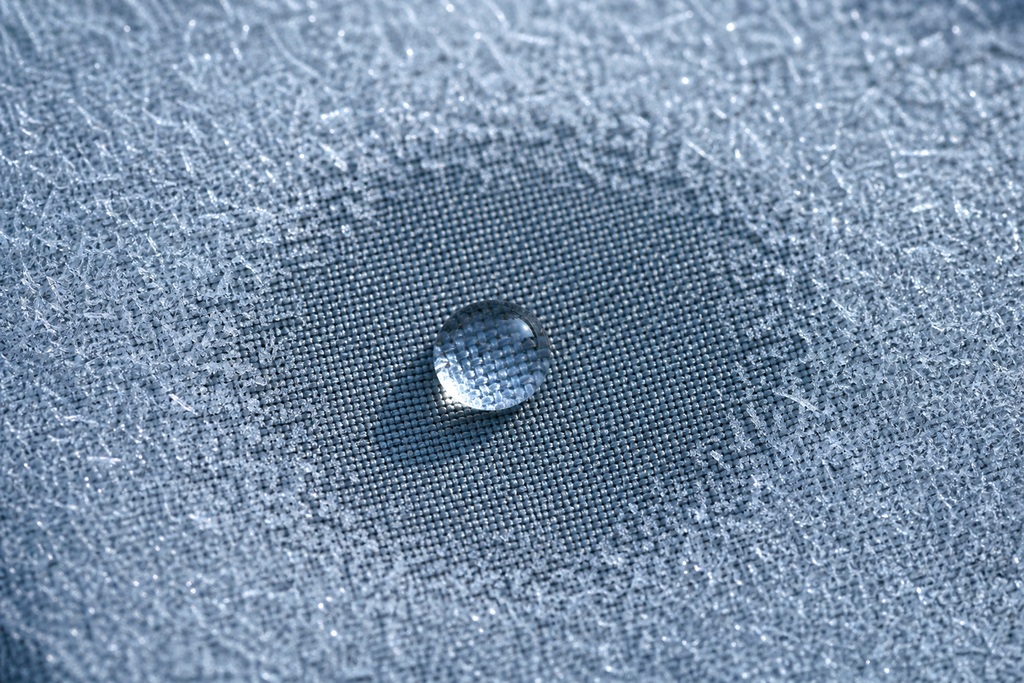
It sheds moisture fast. Graphene is hydrophobic at a molecular level, so sweat wicks away quickly. This is a big deal on multi-day trips: a damp bag loses loft and warmth, and graphene buys you time before that happens.
It fights odors. Graphene’s nanoscale edges can pierce bacterial cell walls, slowing the microbe growth that causes that end-of-trip bag stink.
At 0.335 nanometers per layer, it adds zero bulk. It’s also incredibly strong, reinforcing fabrics against abrasion. These properties are real, though their effect in a blended textile is less than in a pure graphene film.
Three Types of Graphene Sleeping Systems
“Graphene sleeping bag” can mean three very different products, and the differences matter for performance, care, and cost.
| Integration Type | How It Works | Main Benefit | Limitation |
|---|---|---|---|
| Printed inner lining | Microscopic graphene pattern printed on the bag’s interior fabric | Reflects body heat evenly; improves warmth perception | Coating can degrade with washing; heat reflection is modest |
| Infused/blended insulation | Graphene particles or fibers mixed into synthetic fill | Improves loft, accelerates drying, enhances odor resistance at the fill level | Adds cost; performance depends on graphene concentration, which is rarely disclosed |
| Standalone liner | Separate graphene-woven sack placed inside your existing sleeping bag | Adds 5–15°F (3–8°C) to any bag; transferable; weighs only 4–8 oz (113–226 g) | Doesn’t improve the bag’s own insulation; adds a setup step |
The printed lining is common in premium bags. Blended insulation appears in mid-range synthetics. Standalone liners are the most accessible and the most honest about what graphene can do: add a measurable but modest warmth boost to a system you already own.
Graphene Liners: The Simplest Entry Point
A graphene liner is where the claim is hardest to fake: the liner is mostly graphene-infused fabric, not a conventional bag wearing a label.
These are lightweight sacks woven with graphene-infused yarn. You place one inside your sleeping bag to boost its warmth by 5–15°F (3–8°C), or use it alone on warm nights. They weigh 4–8 oz (113–226 g) and pack down to about the size of an apple.
The warmth comes primarily from the graphene reflecting your body’s radiant heat back at you. This is a genuine effect because the graphene is the liner’s primary material, not a trace additive buried in a pound of fill.
If you already own a $200 down bag you like, a $30–$80 liner is a better investment than replacing the entire bag with a $250 graphene model that might not have better insulation. The liner also keeps your bag cleaner, extending the life of down insulation: a benefit that adds up over years.
Where liners fall short: they add a setup step, can feel snug inside a mummy bag, and don’t overcome your bag’s fundamental insulation limit. If your bag is rated to 30°F and you need 15°F performance, a liner won’t bridge that gap.
Your Pre-Purchase Checklist
The checklist for a graphene sleeping bag is the same as for any bag, with one addition: how the graphene is integrated.
- EN/ISO 23537 comfort rating. Use the comfort figure, not “limit” or “extreme.” If you sleep cold, subtract 5–10°F. No rating means it’s thermally unverified.
- Insulation type and quality. Down fill power (650+ for three-season, 800+ for weight savings) or synthetic fill weight. This does most of the thermal work.
- Total weight and packed dimensions. Get actual numbers. Current graphene bags are typically heavier than standard ultralight bags — fine for car camping, heavy for backpacking.
- Graphene integration method. Is it printed, infused, or a liner? Is the graphene permanently bonded (survives washing) or a surface coating (degrades)?
- Sleeping pad pairing. Below freezing, your pad’s R-value matters more than anything in the bag. Compressed insulation under you provides almost no protection — with or without graphene.
- Return policy. Especially important for crowdfunded or new brands with limited field history.
What the Price Premium Gets You
Graphene sleeping bags typically cost 20–40% more than comparable standard bags. Whether it’s worth it depends on the price tier.
| Price Tier | What You Typically Get | Value Judgment |
|---|---|---|
| Budget ($30–$100) | Trace graphene-oxide surface coating on a basic synthetic bag | Negligible performance difference from a standard bag at the same price. Buy for the bag’s own merits (comfort rating, weight, construction) not for graphene. |
| Mid-range ($100–$250) | More credible graphene integration (blended into insulation or permanently printed) | Where the value case is strongest. Graphene’s benefits are real but modest — worth 15–25% more if the core specs are solid. |
| Premium ($250–$500+) | High-quality integration alongside strong base insulation | The premium is partly for graphene and partly for a better bag overall. Compare against top-tier non-graphene bags at the same price — graphene should be the tiebreaker. |
The best return on the graphene premium comes on multi-day trips. Odor resistance and faster drying matter when you’re sleeping in the same bag for five or more nights. For weekend campers, those advantages are mostly theoretical.
Who Should Skip Graphene
Graphene sleeping bags aren’t right for everyone. Three groups should look elsewhere.
Ultralight thru-hikers targeting sub-1 kg sleep systems. Current graphene bags are typically heavier than 1 kg. A premium 850-fill down bag will weigh less and keep you just as warm.
Extreme cold campers below −20°C (−4°F). At those temperatures, insulation, draft collars, and sleeping pad R-value dominate. Graphene’s heat-distribution is marginal. Dedicated cold-weather bags are engineered for different problems.
Buyers who’d sacrifice insulation quality to get the graphene label. A $60 standard synthetic bag with a published EN/ISO rating will keep you warmer than a $60 “graphene” bag with no rating and a surface coating. Don’t compromise on the fundamentals.
Care & Maintenance
How you wash a graphene bag matters. Graphene coatings can degrade under the wrong chemicals, and this is one real difference from a standard bag.
- Use a front-loading machine (no center agitator) with a technical cleaner like Nikwax Tech Wash or mild soap.
- Never use fabric softeners. They coat fibers and permanently destroy graphene’s wicking and reflective properties.
- Never use bleach or heavy-duty detergents. These break down graphene bonds.
- Tumble dry on low heat. This actually reactivates graphene-printed linings and DWR coatings.
- Air drying works, but low-heat drying restores more technical performance.
- Never iron or dry clean. High heat and solvents cause permanent damage.

The Bottom Line
Graphene sleeping bags are a real, still-maturing product category — worth a modest premium over a comparable standard bag, but not a transformative leap.
Graphene adds genuine benefits to heat distribution, drying, odor resistance, and fabric strength. Those benefits are worth paying for if the core bag is already solid: good insulation, verified rating, proper construction. A $150 graphene bag with a credible comfort rating and permanently bonded fibers is a reasonable three-season purchase. A $40 “graphene” bag with no rating and a surface coating is just marketing.
If you’re choosing between a $120 standard bag with a published rating and a $120 graphene bag without one, buy the standard bag every time. If the specs are equal, let graphene be the tiebreaker.
For the most practical entry point, a standalone graphene liner adds measurable warmth, packs to nothing, and moves between bags as you upgrade.
As more graphene sleeping bags gain independent EN/ISO testing and field data, the value case will become clearer. For now, prioritize sleeping bag fundamentals: good insulation, a verified comfort rating, and proper construction. Graphene adds genuine but modest benefits to heat distribution, drying, and odor resistance.
FAQ
What is the best sleeping bag in the world?
There’s no single “best” — performance depends on conditions, body type, and weight. For three-season backpacking, premium 850-fill down bags with a 20°F comfort rating are consistently top-rated. For extreme cold, specialized extreme-cold down bags and modular military systems are proven. Prioritize EN/ISO ratings, fill quality, and fit.
What's the warmest sleeping bag in the world?
The coldest-rated production bags target −40°F to −60°F (−40°C to −51°C). Bags with 1,500 g of 900-fill goose down and specialized extreme cold-weather models are among the warmest commercially available. For true polar expeditions, custom multi-bag layering systems are standard.
What is the US military extreme cold sleeping bag?
The current standard is a modular sleep system, which pairs a patrol bag, an intermediate cold bag, and a bivy cover. Combined, the system is rated for extreme cold. It uses synthetic insulation, weighs roughly 9 lb total, and prioritizes durability over weight savings.
What's the coldest rated sleeping bag?
The coldest-rated production bags reach −40°F to −60°F (−40°C to −51°C). Standard EN/ISO 23537 testing only rates bags down to −24°C (−11°F), so extreme ratings below that use manufacturer testing, which is less consistent. Below −40°F, most cold-weather professionals rely on modular layering rather than trusting a single bag.
References
- ISO 23537-1:2022. Requirements for Sleeping Bags — Thermal and Dimensional Requirements. International Organization for Standardization.